Alcohol, muscle and sleep: what the studies found
Does a night of drinking blunt muscle repair, wreck sleep or stall fat loss? The real numbers, the doses used, and the honest limits of the research.
In this article
- The question after a good night out
- What your body does with alcohol first
- Muscle: does it get in the way of rebuilding?
- Strength and soreness: the results are mixed
- Fuel, fluid and hormones
- Sleep: where the pattern is clearer
- The morning after
- Appetite and fat loss
- The big picture: dose and long-term health
- What a night out may cost: the takeaways
- How Chiron fits in
- Sources
The question after a good night out
You have training planned for tomorrow, and the night out ran late. Did the alcohol blunt your muscle repair? Wreck your sleep? Stall your fat loss? Or is all of that gym folklore?
This article goes through what studies actually measured: the numbers, the doses, and where each result stops being reliable. It is information, not a rule about what to drink. Keep in mind that many of these studies are small, many gave large doses on purpose so an effect would be easy to see, and the biggest datasets are observational. That limits what they can say about one person on one night.
What your body does with alcohol first
Alcohol is ethanol, and it carries about 7 calories per gram, more than carbohydrate or protein, which have 4. Most of it is processed in the liver, and the main enzyme gets saturated after the first few drinks, so blood alcohol falls at a fairly steady pace: a 2010 review put the average for moderate drinkers at about 15 mg per 100 mL per hour.
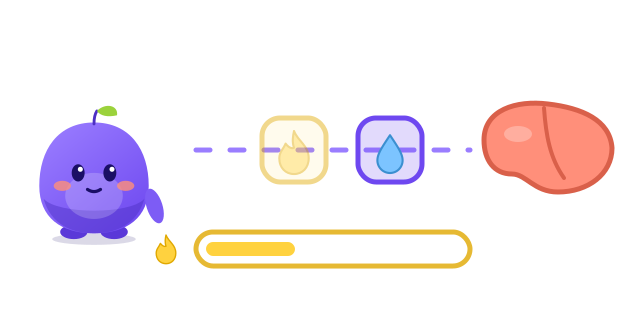
While that is going on, the body seems to push fat burning down the queue. In a 1992 study in the New England Journal of Medicine, eight men spent two days in a chamber that measures energy use. Adding about 96 g of ethanol across the day cut their fat burning by around 36%. Swapping it in for other food cut it by about 31%. Carbohydrate and protein burning were not significantly changed. The authors concluded that habitually taking in more energy than you need from ethanol probably favors fat storage and weight gain.
The limit: eight men, one day, a big dose. It shows a mechanism, not what happens to your waistline.
Muscle: does it get in the way of rebuilding?
Muscle grows when you rebuild it after training. Does alcohol interfere? The best-known test is a 2014 study by Parr and colleagues.
- Who and what. Eight physically active men did heavy leg extensions, then hard cycling, on three occasions. Right after, and four hours later, they drank whey protein; alcohol with protein; or alcohol with carbohydrate.
- The dose. 1.5 g of alcohol per kilogram of body weight, which the paper counts as about twelve standard drinks.
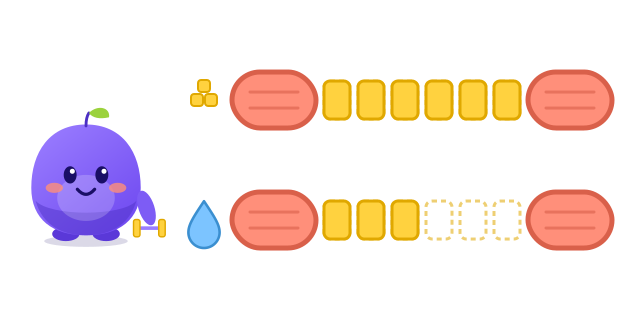
- The result. Muscle biopsies measured how fast the muscle was building new protein. Compared with protein alone, building was 24% lower with alcohol plus protein and 37% lower with alcohol plus carbohydrate. It still rose above resting levels in every condition, but the authors concluded that alcohol suppresses the building response, even with protein on board.
The limits: eight men, a very large dose, a few hours of measurements, not months of training.
A 2017 study by Duplanty and colleagues looked at weights only: ten trained men and nine trained women did heavy squats, then drank alcohol or a placebo. In the men, a key building signal called mTOR was higher three hours later after the placebo than after alcohol. In the women, alcohol did not blunt it. That is a signal in muscle samples, not muscle you can see in the mirror.
Strength and soreness: the results are mixed
Does it show up in how strong you are the next day? Here the research does not agree with itself.
- A result that did show a drop. In a 2010 study by Barnes and colleagues, ten men did 300 maximal eccentric leg contractions, the kind that leaves you properly sore, then drank vodka and orange juice at 1 g of alcohol per kilogram, or juice alone. Thirty-six hours later, strength had dropped by about 41 to 45% after alcohol, against about 26 to 32% after juice.
- Half the dose. The same team repeated it at 0.5 g per kilogram and found no difference between the alcohol and the non-alcoholic drink.
- A simulated rugby match. At 1 g per kilogram, jump performance was lower in the following days, but agility, sprinting and scrummaging were not.
- Results with no effect. In thirteen trained women, and in a separate study of eight young women, alcohol after muscle-damaging exercise did not change how well strength recovered. In ten trained men, alcohol after heavy squats changed neither jump power, sprinting nor soreness over two days.
A 2014 review by Barnes put it this way: at the levels many athletes drink, alcohol may impair recovery from muscle injury, depending on dose, timing and injury status, while about 0.5 g per kilogram is unlikely to affect most aspects of recovery. In short: large doses hurt some measures, smaller doses mostly did not, and every one of these studies is small.
Fuel, fluid and hormones
Two other worries are refuelling and rehydration. In a 2003 study of well-trained cyclists (only a handful took part), alcohol replaced some of their carbohydrate after a draining ride, and muscle glycogen eight hours later was lower: 24 against 45 mmol per kilogram. When alcohol was added on top of the same carbohydrate, the 24-hour value did not differ. The authors concluded that the main effect is indirect: alcohol displaces carbohydrate.
On fluids, a 1997 study found a negligible diuretic effect in drinks up to 2% alcohol after moderate dehydration, while a 4% drink tended to delay recovery.
Hormones are messier. Testosterone is the popular worry, and the data point both ways. In a 2003 crossover trial of thirteen men, a lower dose, 0.5 g per kilogram, was followed by a rise in testosterone. In an emergency-department study, men who arrived visibly drunk had lower testosterone than sober volunteers, and both sexes had higher cortisol (not a controlled dose). After the rugby match, testosterone and cortisol over 48 hours did not differ between alcohol and the control drink. Different doses, different people, different designs: a single hormone headline cannot tell you much.
Sleep: where the pattern is clearer
People drink to fall asleep, and a 2013 review of lab studies in healthy volunteers found that at every dose alcohol shortens the time it takes to nod off. The first half of the night is more consolidated, and deep slow-wave sleep tends to go up. But the second half is more disrupted.
REM sleep, the dreaming stage, is where the cost shows. The first REM period is delayed at every dose, and total REM is reduced in most studies at moderate and high doses.
A 2025 meta-analysis of 27 studies added the dose-response. REM was disrupted even at a low dose, up to 0.5 g per kilogram (which the authors describe as around two standard drinks), and it got progressively worse with higher doses. Effects on total sleep time, sleep efficiency and waking in the night were too uncertain to call.
A 2001 sleep-medicine review sums up the shape: in people without a drinking problem alcohol initially improves sleep, then disturbs the second half of the night at high doses, and tolerance to the early benefit develops.
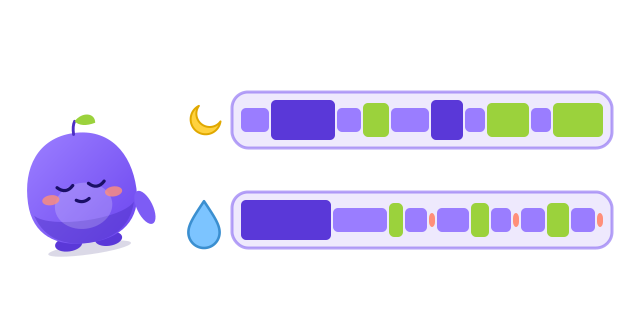
The picture above is a schematic of the pattern the reviews describe, not recorded data. Green blocks are REM.
What about real life? In a 2018 Finnish study, 4,098 employees wore a heart-rate recorder and logged their drinks, and each person’s nights with alcohol were compared with their own nights without. In the first three hours of sleep, alcohol meant more stress-system activity, less rest-and-digest activity and a poorer recovery state, growing with the dose. A recovery score based on heart rate variability fell by 9 percentage points on average after a low dose, 24 after a moderate dose and 39 after a high dose. It showed up in men and women alike, and was stronger in younger participants.
The limits: it is observational, the drinks were self-reported, and it measures the first three hours of sleep, not the whole night.
The morning after
Hangover researchers define it as mental and physical symptoms the day after a single heavy drinking episode, starting when blood alcohol approaches zero.
A 2018 systematic review of 19 studies and 1,163 people found impairments in memory, sustained attention and psychomotor speed, with pooled effect sizes of roughly half to two-thirds of a standard deviation.
Physical performance is less clear. In a 2019 study, 299 people hiked the Samaria Gorge in Crete, nearly 16 kilometres, after reporting the previous evening’s drinks. Those with a hangover felt significantly more exhausted afterwards, yet walking time and breaks did not differ. In another 2019 study, 25 social drinkers wore activity watches: a heavy evening cut sleep efficiency and was followed by lower activity. A 2008 review cautioned that many hangover studies had basic methodological shortcomings, and that people know which day is the hangover, so expectation may play a part.
What causes it? A 2010 review of the biology found that hormones, electrolytes, glucose and even markers of dehydration were not significantly related to hangover severity. The immune system stood out most, and poor sleep, smoking and congeners can make a hangover worse without causing it.
Do cures work? A 2005 BMJ review of randomised trials found no compelling evidence that any conventional or complementary intervention works. A 2022 review of 21 placebo-controlled trials (386 participants) rated all the evidence of benefit as very low quality, and a 2021 analysis of 82 marketed hangover products found no peer-reviewed human data showing safety or effectiveness for any of them.
Appetite and fat loss
Beyond the calories and the fat-burning pause, there is what you eat around the drink.
- A 2001 lab study of 26 men. About 24 g of alcohol half an hour before a buffet lunch led to more food eaten, about 200 extra kilocalories, and total energy intake came out 30% higher.
- A 2004 study of 12 men. Four units (32 g) raised hunger and lunch intake more than one unit did, and the day’s total energy was about 330 kilocalories higher.
- A 2019 review of 22 studies, with a meta-analysis of 12. People did not compensate for the calories in alcohol: about 82 more kilocalories of food, and about 256 more in total. Those studies were in adults aged 18 to 37, with a lot of variation between them.
A 2010 review put the short-term point plainly: energy from alcohol adds on top of energy from other sources. But over months and years it blurs. A 2015 review found that light-to-moderate drinking was not associated with gaining body fat in recent prospective studies, while heavy drinking was more consistently linked to weight gain. One reason the authors gave: people who drink moderately may have healthier lifestyles overall, which makes cause and effect hard to untangle.
The honest summary: a night of drinking adds calories that most people do not make up for, and may nudge you to eat more. Whether that shows up on the scale depends on how often, how much, and everything else.
The big picture: dose and long-term health
What do the largest datasets say? None of them is about a single night: they describe long-run patterns in groups of people.
- Global Burden of Disease, 2018. The level of drinking that minimised overall health loss was estimated at zero standard drinks a week, with an uncertainty range of zero to 0.8. It is a population-level estimate across 195 locations and 23 health outcomes, and it found that the risk of dying from any cause, and of cancers, rose with more drinking. It is not a prediction for any one person.
- Wood and colleagues, 2018. Individual data pooled from 599,912 current drinkers in 83 studies, in high-income countries. For death from any cause, the lowest risk sat around or below 100 g of alcohol a week. Compared with under 100 g, life expectancy at age 40 was lower by roughly six months at 100 to 200 g, one to two years at 200 to 350 g, and four to five years above that. For stroke, risk rose roughly in a straight line, while for heart attack the association ran the other way: the picture differs by outcome.
- The protective drink. You may have heard that a drink a day protects you. In a 2016 meta-analysis of 87 studies by Stockwell and colleagues, the classic J-shaped curve appeared, until they adjusted for abstainer groups that included former drinkers. Then the benefit for low-volume drinkers vanished: relative risk 0.97. A 2023 update of 107 studies and 4.8 million people found the same: no significantly lower all-cause mortality for occasional or low-volume drinkers than for lifetime non-drinkers, and a significantly higher risk from 45 g a day, starting lower for women.
The limits: these are observational cohorts. They show associations, not proof of cause, and researchers disagree on how to handle former drinkers and other confounders.
What a night out may cost: the takeaways
- Muscle. The clearest signal came from a very large dose, which lowered muscle building in eight men. With smaller doses, recovery measures mostly did not change in small studies.
- Sleep. The most consistent finding. Even low doses disrupted REM sleep, and a large real-world study found poorer heart-rate recovery, growing with the dose.
- The next day. A hangover can affect attention and memory, and no cure has solid evidence.
- Fat loss. Alcohol calories are not offset by eating less, and appetite can rise, so it adds up.
- Long term. The largest studies find risk rising with intake, and the idea of a protective drink is shaky.
How Chiron fits in
Chiron cannot tell you what a night out did to you. What it can do is show your own pattern. With Health Connect or Apple Health connected, it shows last night’s sleep, the last seven nights against your own sleep target, how regular your bedtime is, and your resting heart rate and heart-rate variability against your own usual. It words these as patterns and says plainly that it cannot tell what a change means. Chiron is a wellness app, not a medical device.
A note before you go. This article is general information, not medical advice and not an instruction to drink or not to drink. The doses are whatever the studies used, several of them large doses given to small groups, and they must not be copied. None of it is personal advice. If you are pregnant, take medication or have a health condition, talk to a doctor about alcohol. If you are worried about your own drinking, or find it hard to cut down, ask a doctor or a professional support service for help. Help is available.
Sources
- Jones AW. Elimination rates of ethanol from blood. Forensic Science International, 2010. doi:10.1016/j.forsciint.2010.02.021
- Suter PM, Schutz Y, Jequier E. Effect of ethanol on fat storage. New England Journal of Medicine, 1992. doi:10.1056/nejm199204093261503
- Parr EB, et al. Alcohol and muscle protein synthesis after concurrent training. PLoS One, 2014. doi:10.1371/journal.pone.0088384
- Duplanty AA, et al. Alcohol and resistance exercise-induced mTORC1 signaling. Journal of Strength and Conditioning Research, 2017. doi:10.1519/jsc.0000000000001468
- Barnes MJ, Mundel T, Stannard SR. Post-exercise alcohol and eccentric-exercise losses in performance. European Journal of Applied Physiology, 2010. doi:10.1007/s00421-009-1311-3
- Barnes MJ, Mundel T, Stannard SR. A low dose of alcohol after muscle damage. European Journal of Applied Physiology, 2011. doi:10.1007/s00421-010-1655-8
- Barnes MJ, Mundel T, Stannard SR. Alcohol and recovery from a simulated rugby match. Journal of Sports Sciences, 2012. doi:10.1080/02640414.2011.637949
- Levitt DE, et al. Alcohol after muscle-damaging exercise in women. European Journal of Applied Physiology, 2017. doi:10.1007/s00421-017-3606-0
- McLeay Y, et al. Alcohol and recovery from eccentric exercise in females. International Journal of Sport Nutrition and Exercise Metabolism, 2017. doi:10.1123/ijsnem.2016-0171
- Levitt DE, et al. Alcohol after resistance exercise and muscle power recovery. Journal of Strength and Conditioning Research, 2020. doi:10.1519/jsc.0000000000002455
- Barnes MJ. Alcohol: impact on sports performance and recovery in male athletes. Sports Medicine, 2014. doi:10.1007/s40279-014-0192-8
- Burke LM, et al. Alcohol and muscle glycogen storage after prolonged exercise. Journal of Applied Physiology, 2003. doi:10.1152/japplphysiol.00115.2003
- Shirreffs SM, Maughan RJ. Alcohol and restoration of fluid balance after exercise. Journal of Applied Physiology, 1997. doi:10.1152/jappl.1997.83.4.1152
- Sarkola T, Eriksson CJP. Testosterone after a low dose of alcohol in men. Alcoholism: Clinical and Experimental Research, 2003. doi:10.1097/01.alc.0000060526.43976.68
- Frias J, et al. Acute alcohol intoxication and pituitary-gonadal and adrenal hormones in adults. Alcohol and Alcoholism, 2002. doi:10.1093/alcalc/37.2.169
- Ebrahim IO, et al. Alcohol and sleep I: effects on normal sleep. Alcoholism: Clinical and Experimental Research, 2013. doi:10.1111/acer.12006
- Gardiner C, et al. Effect of alcohol on subsequent sleep: systematic review and meta-analysis. Sleep Medicine Reviews, 2025. doi:10.1016/j.smrv.2024.102030
- Roehrs T, Roth T. Sleep, sleepiness, sleep disorders and alcohol use and abuse. Sleep Medicine Reviews, 2001. doi:10.1053/smrv.2001.0162
- Pietila J, et al. Acute effect of alcohol on cardiovascular autonomic regulation during sleep, Finnish employees. JMIR Mental Health, 2018. doi:10.2196/mental.9519
- Gunn C, et al. Next-day effects of heavy alcohol consumption on cognitive performance: systematic review. Addiction, 2018. doi:10.1111/add.14404
- Verster JC, et al. Alcohol hangover and physical endurance: walking the Samaria Gorge. Journal of Clinical Medicine, 2019. doi:10.3390/jcm9010114
- Devenney LE, et al. Sleep after heavy alcohol consumption and activity during hangover. Journal of Clinical Medicine, 2019. doi:10.3390/jcm8050752
- Stephens R, et al. Cognitive effects of alcohol hangover: a review. Alcohol and Alcoholism, 2008. doi:10.1093/alcalc/agm160
- Penning R, et al. The pathology of alcohol hangover. Current Drug Abuse Reviews, 2010. doi:10.2174/1874473711003020068
- Pittler MH, Verster JC, Ernst E. Interventions for alcohol hangover: systematic review. BMJ, 2005. doi:10.1136/bmj.331.7531.1515
- Roberts E, et al. Pharmacologically active interventions for hangover: systematic review. Addiction, 2022. doi:10.1111/add.15786
- Verster JC, van Rossum CTM, Scholey A. Safety and efficacy of hangover treatments. Addictive Behaviors, 2021. doi:10.1016/j.addbeh.2021.107029
- Hetherington MM, et al. Stimulation of appetite by alcohol. Physiology & Behavior, 2001. doi:10.1016/s0031-9384(01)00598-4
- Caton SJ, et al. Dose-dependent effects of alcohol on appetite and food intake. Physiology & Behavior, 2004. doi:10.1016/j.physbeh.2003.12.017
- Kwok A, et al. Effect of alcohol on food energy intake: systematic review and meta-analysis. British Journal of Nutrition, 2019. doi:10.1017/s0007114518003677
- Yeomans MR. Alcohol, appetite and energy balance. Physiology & Behavior, 2010. doi:10.1016/j.physbeh.2010.01.012
- Traversy G, Chaput JP. Alcohol consumption and obesity: an update. Current Obesity Reports, 2015. doi:10.1007/s13679-014-0129-4
- GBD 2016 Alcohol Collaborators. Alcohol use and burden for 195 countries and territories. The Lancet, 2018. doi:10.1016/s0140-6736(18)31310-2
- Wood AM, et al. Risk thresholds for alcohol consumption: 599,912 current drinkers in 83 studies. The Lancet, 2018. doi:10.1016/s0140-6736(18)30134-x
- Stockwell T, et al. Do “moderate” drinkers have reduced mortality risk? Systematic review and meta-analysis. Journal of Studies on Alcohol and Drugs, 2016. doi:10.15288/jsad.2016.77.185
- Zhao J, et al. Daily alcohol intake and all-cause mortality: systematic review and meta-analyses. JAMA Network Open, 2023. doi:10.1001/jamanetworkopen.2023.6185
Chiron is a wellness and tracking app, not a medical device. Figures are estimates, and AI can be wrong. Read the health and AI disclaimer.