Sleep: how much you need, and what the research says about short nights
Is eight hours a magic number? Experts say 7 to 9 for adults. Here is what studies show about short sleep, muscle, appetite, caffeine, light and regular bedtimes.
In this article
- The number everyone quotes
- What happens while you sleep
- Where “eight hours” comes from
- Too little, too much, and what the data cannot say
- What short sleep costs
- Muscle and training
- Sleep, hunger and fat loss
- Small levers that the studies point to
- Regularity may matter as much as hours
- Exercise, naps and catching up
- What is oversold
- What to take from all this
- How Chiron helps with this
- Sources
The number everyone quotes
You have probably been told you need eight hours of sleep. It is a tidy number, and it is repeated everywhere. But where does it come from, and what does it cost you if you get less?
This article goes through what the research shows, with named studies, the real numbers and their limits. It is general information, not medical advice.
What happens while you sleep
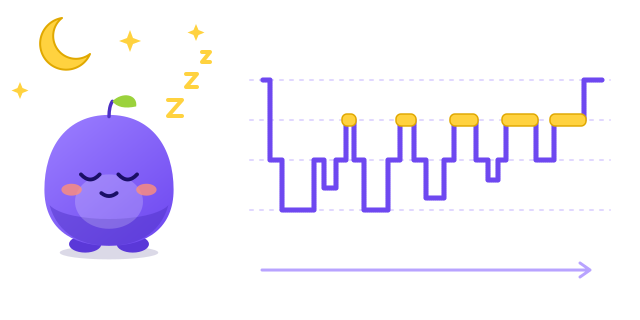
Sleep is not one flat state. It is a cycle of stages: light sleep, deep sleep and REM sleep, each with its own brain waves, muscle tone and eye movements. A physiology review (Patel and colleagues, 2024) describes about four to six of these cycles a night, averaging around ninety minutes each.
The mix changes across the night. The early hours are dominated by slow-wave, deep sleep, and the late hours by REM sleep.
Where “eight hours” comes from
Look at what the expert groups actually wrote.
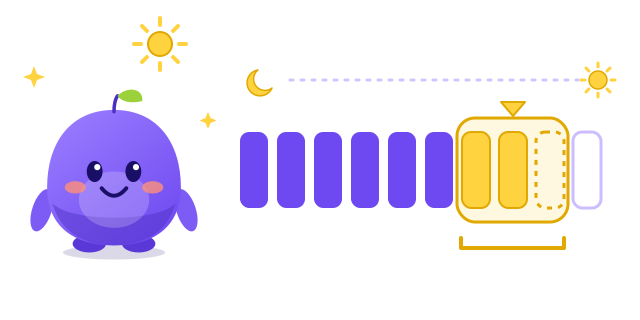
- National Sleep Foundation, 2015. A panel of eighteen experts representing twelve organisations reviewed the evidence. For healthy adults, they landed on 7 to 9 hours, and 7 to 8 hours for older adults. They added that needs vary from person to person, and that the range is for people without a sleep disorder (Hirshkowitz and colleagues).
- American Academy of Sleep Medicine and Sleep Research Society, 2015. A joint consensus statement: adults should sleep 7 or more hours a night on a regular basis, to promote optimal health (Watson and colleagues).
Notice what is missing: neither says eight. It is a range, and eight sits in the middle of it.
Too little, too much, and what the data cannot say
A 2010 meta-analysis (Cappuccio and colleagues) pooled sixteen prospective studies: nearly 1.4 million people and about 112,000 deaths. Short sleepers had a 12% higher risk of dying from any cause, and long sleepers a 30% higher risk.
The honest limits: people reported their sleep on questionnaires, the studies disagreed with each other, and this kind of study cannot tell us what causes what. And questionnaires are shaky. In a 2008 study of about 670 adults (Lauderdale and colleagues), people sleeping about five hours over-reported their sleep by roughly 1.2 hours.
Researchers who recorded sleep in three pre-industrial societies (Yetish and colleagues, 2015) found averages of 5.7 to 7.1 hours. That does not prove you can get by on six. It only shows that eight is not a law of nature.
What short sleep costs
So can you get used to less? The best-known test is a 2003 experiment (Van Dongen and colleagues). Healthy adults spent four, six or eight hours in bed every night for fourteen nights. At four and at six hours, performance on thinking tasks got worse, night after night, and six hours or less produced deficits equal to up to two full nights without sleep.
The twist is that their sleepiness ratings barely climbed after the first days, so people were largely unaware of how impaired they had become.
Muscle and training
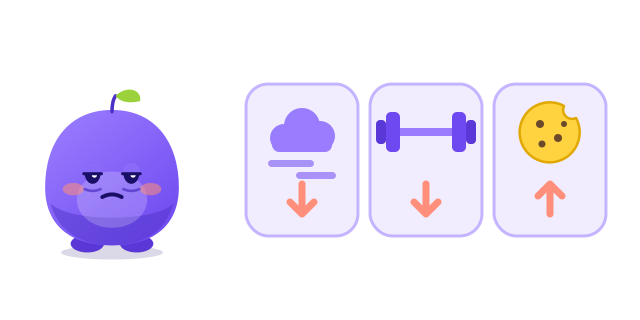
- One night without sleep. In a 2021 study (Lamon and colleagues), thirteen healthy young adults had one night with no sleep and one night of normal sleep, in random order. After the sleepless night, muscle protein synthesis was 18% lower, cortisol 21% higher and testosterone 24% lower. One night of total deprivation in thirteen people is a clue about mechanisms, not proof about your six-hour weeks.
- Five short nights. In a 2020 study (Saner and colleagues), twenty-four young men spent five nights with four hours in bed. Their muscle protein synthesis was lower than in the normal-sleep group, while a group that also did three high-intensity interval sessions kept it at the control level. Young men, one week, a small trial.
- Performance. A 2022 review (Craven and colleagues) pooled 69 publications, mostly in men. On average, exercise performance was about 7.5% lower after sleep loss, though the studies varied enormously. Morning tasks were largely unaffected, while later-in-the-day tasks were consistently hit.
- The other direction. Eleven college basketball players tried to spend at least ten hours in bed for five to seven weeks (Mah and colleagues, 2011). Sleep rose by about 111 minutes a night, sprints got faster and free throw accuracy rose 9%, but there was no control group, so practice and motivation could play a part.
Sleep, hunger and fat loss
The effect most people notice first is hunger after a bad night.
- Hormones and appetite. In 2004 (Spiegel and colleagues), twelve healthy young men had two days of short sleep and two days of extended sleep. After short sleep, leptin, which dampens appetite, was 18% lower, and ghrelin, which stimulates it, was 28% higher. Hunger rose 24% and appetite 23%, most of all for calorie-dense, high-carbohydrate foods (up 33 to 45%). Only twelve young men.
- Real intake. A 2017 meta-analysis (Al Khatib and colleagues) pooled eleven studies and 172 people with partial sleep deprivation. Energy intake was 385 kcal higher, with no significant change in energy expenditure. A 2015 review of randomised trials (Capers and colleagues) was more cautious: weight effects were inconsistent.
- Sleeping more. In a 2022 randomised trial (Tasali and colleagues), 80 adults with overweight who normally slept under 6.5 hours got either a sleep extension counselling session or carried on as usual. The extension group slept about 1.2 hours longer, and their objectively measured energy intake was about 270 kcal a day lower than the control group’s. That was adults aged 21 to 40 with overweight and short habitual sleep, so it does not automatically apply to everyone.
- Dieting on short sleep. In a 2010 crossover trial (Nedeltcheva and colleagues), ten overweight adults ate a reduced-calorie diet for fourteen days, once with an 8.5-hour sleep opportunity and once with 5.5. With the shorter sleep, they lost 0.6 kg of fat instead of 1.4, and more fat-free mass: 2.4 kg instead of 1.5. Ten people for two weeks is small.
Small levers that the studies point to
Hours are not the only thing: the evening around bed shows up in the research too.
- Caffeine. In a 2013 trial (Drake and colleagues), people took 400 mg of caffeine at bedtime, three hours before, or six hours before, against placebo. Even the dose taken six hours before bed had a significant effect on sleep, and the authors concluded it supports avoiding substantial caffeine for at least six hours. A 2023 meta-analysis of 24 studies (Gardiner and colleagues) found caffeine cut total sleep time by 45 minutes on average and sleep efficiency by 7%. Their model estimate was at least 8.8 hours before bed for an average coffee and about 13 hours for a pre-workout serving: estimates, not a rule for every person.
- Evening light. In an analysis of 116 healthy volunteers aged 18 to 30 (Gooley and colleagues, 2011), room light in the eight hours before bed, compared with dim light, pushed back melatonin onset in 99% of people and shortened melatonin duration by about 90 minutes. It was a retrospective analysis in young people, and it measured melatonin, not sleep quality.
- Screens. In a 2015 lab study (Chang and colleagues), people read either a light-emitting e-reader or a printed book before bed. With the e-reader they took longer to fall asleep, made less melatonin, their body clock shifted later and they were less alert the next morning. One type of device, in a lab: it does not tell you what your own phone settings do. As for blue-light glasses, a 2023 Cochrane review (Singh and colleagues) could not say whether they improve sleep: three trials found an improvement, three found no difference, and the certainty was very low.
- Temperature. A 2019 meta-analysis (Haghayegh and colleagues) found that a warm shower or bath, 40 to 42.5 °C, was linked to better self-rated sleep quality and sleep efficiency. Taken one to two hours before bed, even ten minutes shortened the time to fall asleep. The proposed mechanism is that warm water brings blood to your hands and feet, so you lose heat faster afterwards and your core temperature falls. The authors say research is still scarce. Heat in the bedroom pulls the other way: a 2012 review (Okamoto-Mizuno and Mizuno) found it increases wakefulness and decreases deep and REM sleep.
Regularity may matter as much as hours
Regularity means how consistent your sleep and wake times are from day to day. In 2024, Windred and colleagues calculated a Sleep Regularity Index from over ten million hours of accelerometer data from about 61,000 UK Biobank participants, average age 63. Over about six years, the four most regular fifths had a 20 to 48% lower risk of dying from any cause than the least regular fifth, and in their models regularity predicted this more strongly than duration did.
The limits: it is observational, in middle-aged and older people, with 1,859 deaths. It cannot prove regular sleep is the cause.
Smaller studies point the same way. In 61 undergraduates followed for thirty days (Phillips and colleagues, 2017), the most irregular sleepers’ melatonin onset came around midnight, versus about 9:30 in the evening for the most regular ones. In about 2,000 adults wearing a wrist monitor for a week (Huang and Redline, 2019), each extra hour of variation in sleep timing went with 23% higher odds of metabolic syndrome, even after accounting for duration. All associations, but they point the same way.
Exercise, naps and catching up
- Exercise. A 2015 meta-analysis of 66 studies (Kredlow and colleagues) found small beneficial effects of a single session on total sleep time and sleep onset, and moderate effects of regular exercise on sleep quality. The old rule against evening workouts did not hold up in a 2019 meta-analysis of 23 studies (Stutz and colleagues): evening exercise did not harm sleep. The possible exception, vigorous exercise ending within an hour of bedtime, disappeared when one study was removed, so hold it loosely.
- Weekend catch-up. In a 2019 experiment (Depner and colleagues), healthy young adults had a workweek of five-hour nights, then a weekend of free recovery sleep, then more short nights. They slept about an hour more at the weekend, but during the short nights afterwards they still ate more after dinner, gained weight and lost insulin sensitivity. The groups were small, fourteen or fewer. The authors concluded that weekend recovery sleep did not prevent these metabolic effects.
- Naps. A 2021 meta-analysis of eleven studies and 381 people (Dutheil and colleagues), with naps averaging about 55 minutes, found a small improvement in cognitive performance, strongest for alertness. Results right after waking were mixed (sleep inertia), and almost all were laboratory studies, so they cannot tell us how naps fit into your real week.
What is oversold
- Trackers. A 2021 study (Chinoy and colleagues) tested seven consumer devices against polysomnography, the lab standard, in 34 healthy young adults. Most were good at telling sleep from wake (sensitivity at or above 93%), but they were poor at spotting that you are awake (specificity only 18 to 54%), and stage readings were inconsistent. Treat a stage chart as a rough sketch. A 2017 clinical report (Baron and colleagues) described people seeking treatment for sleep problems they had diagnosed themselves from tracker data, and called it orthosomnia.
- The nightcap. A review of studies in healthy volunteers (Ebrahim and colleagues, 2013) found alcohol shortens the time to fall asleep, but increases disruption in the second half of the night and delays REM sleep.
What to take from all this
- It is a range, not a magic number. Experts say 7 to 9 hours for adults, and in the lab people did not simply adapt to six.
- Short sleep went with worse results: lower muscle protein synthesis, weaker performance and more eating, in mostly small trials.
- Timing counts. Steady sleep and wake times, caffeine well before bed, dimmer evening light and a warm shower an hour or two before.
- Exercise and naps can help within limits, and a weekend lie-in does not undo a short week.
- Hold trackers loosely. Do not chase a perfect score.
None of this is a prescription: many of these studies were small, short, run in a lab or in young adults. If you struggle to sleep most nights, snore loudly, gasp at night, or feel exhausted despite enough hours, please see a doctor.
How Chiron helps with this
If you connect Health Connect (Android) or Apple Health (iOS) and allow it, Chiron shows last night, the last seven nights against your own sleep target, and how regular your bedtime is. It shows the pattern and does not tell you what caused it. Without that Health data, the sleep screen has nothing to show.
Chiron is a wellness app, not a medical device, and the sleep screen says it cannot tell what a change means.
Sources
- Patel AK, Reddy V, Shumway KR, Araujo JF. Physiology, sleep stages. StatPearls, 2024.
- Hirshkowitz M, Whiton K, Albert SM, et al. National Sleep Foundation’s sleep time duration recommendations: methodology and results summary. Sleep Health, 2015.
- Watson NF, Badr MS, Belenky G, et al. Recommended amount of sleep for a healthy adult: a joint consensus statement of the American Academy of Sleep Medicine and Sleep Research Society. Sleep, 2015.
- Cappuccio FP, D’Elia L, Strazzullo P, Miller MA. Sleep duration and all-cause mortality: a systematic review and meta-analysis of prospective studies. Sleep, 2010.
- Lauderdale DS, Knutson KL, Yan LL, et al. Self-reported and measured sleep duration: how similar are they? Epidemiology, 2008.
- Yetish G, Kaplan H, Gurven M, et al. Natural sleep and its seasonal variations in three pre-industrial societies. Current Biology, 2015.
- Van Dongen HPA, Maislin G, Mullington JM, Dinges DF. The cumulative cost of additional wakefulness: dose-response effects on neurobehavioral functions and sleep physiology from chronic sleep restriction and total sleep deprivation. Sleep, 2003.
- Lamon S, Morabito A, Arentson-Lantz E, et al. The effect of acute sleep deprivation on skeletal muscle protein synthesis and the hormonal environment. Physiological Reports, 2021.
- Saner NJ, Lee MJ-C, Pitchford NW, et al. The effect of sleep restriction, with or without high-intensity interval exercise, on myofibrillar protein synthesis in healthy young men. The Journal of Physiology, 2020.
- Craven J, McCartney D, Desbrow B, et al. Effects of acute sleep loss on physical performance: a systematic and meta-analytical review. Sports Medicine, 2022.
- Mah CD, Mah KE, Kezirian EJ, Dement WC. The effects of sleep extension on the athletic performance of collegiate basketball players. Sleep, 2011.
- Spiegel K, Tasali E, Penev P, Van Cauter E. Brief communication: sleep curtailment in healthy young men is associated with decreased leptin levels, elevated ghrelin levels, and increased hunger and appetite. Annals of Internal Medicine, 2004.
- Al Khatib HK, Harding SV, Darzi J, Pot GK. The effects of partial sleep deprivation on energy balance: a systematic review and meta-analysis. European Journal of Clinical Nutrition, 2017.
- Capers PL, Fobian AD, Kaiser KA, et al. A systematic review and meta-analysis of randomized controlled trials of the impact of sleep duration on adiposity and components of energy balance. Obesity Reviews, 2015.
- Tasali E, Wroblewski K, Kahn E, et al. Effect of sleep extension on objectively assessed energy intake among adults with overweight in real-life settings: a randomized clinical trial. JAMA Internal Medicine, 2022.
- Nedeltcheva AV, Kilkus JM, Imperial J, et al. Insufficient sleep undermines dietary efforts to reduce adiposity. Annals of Internal Medicine, 2010.
- Drake C, Roehrs T, Shambroom J, Roth T. Caffeine effects on sleep taken 0, 3, or 6 hours before going to bed. Journal of Clinical Sleep Medicine, 2013.
- Gardiner C, Weakley J, Burke LM, et al. The effect of caffeine on subsequent sleep: a systematic review and meta-analysis. Sleep Medicine Reviews, 2023.
- Gooley JJ, Chamberlain K, Smith KA, et al. Exposure to room light before bedtime suppresses melatonin onset and shortens melatonin duration in humans. The Journal of Clinical Endocrinology & Metabolism, 2011.
- Chang AM, Aeschbach D, Duffy JF, Czeisler CA. Evening use of light-emitting eReaders negatively affects sleep, circadian timing, and next-morning alertness. Proceedings of the National Academy of Sciences, 2015.
- Singh S, Keller PR, Busija L, et al. Blue-light filtering spectacle lenses for visual performance, sleep, and macular health in adults. Cochrane Database of Systematic Reviews, 2023.
- Haghayegh S, Khoshnevis S, Smolensky MH, et al. Before-bedtime passive body heating by warm shower or bath to improve sleep: a systematic review and meta-analysis. Sleep Medicine Reviews, 2019.
- Okamoto-Mizuno K, Mizuno K. Effects of thermal environment on sleep and circadian rhythm. Journal of Physiological Anthropology, 2012.
- Windred DP, Burns AC, Lane JM, et al. Sleep regularity is a stronger predictor of mortality risk than sleep duration: a prospective cohort study. Sleep, 2024.
- Phillips AJK, Clerx WM, O’Brien CS, et al. Irregular sleep/wake patterns are associated with poorer academic performance and delayed circadian and sleep/wake timing. Scientific Reports, 2017.
- Huang T, Redline S. Cross-sectional and prospective associations of actigraphy-assessed sleep regularity with metabolic abnormalities: the Multi-Ethnic Study of Atherosclerosis. Diabetes Care, 2019.
- Kredlow MA, Capozzoli MC, Hearon BA, et al. The effects of physical activity on sleep: a meta-analytic review. Journal of Behavioral Medicine, 2015.
- Stutz J, Eiholzer R, Spengler CM. Effects of evening exercise on sleep in healthy participants: a systematic review and meta-analysis. Sports Medicine, 2019.
- Depner CM, Melanson EL, Eckel RH, et al. Ad libitum weekend recovery sleep fails to prevent metabolic dysregulation during a repeating pattern of insufficient sleep and weekend recovery sleep. Current Biology, 2019.
- Dutheil F, Danini B, Bagheri R, et al. Effects of a short daytime nap on the cognitive performance: a systematic review and meta-analysis. International Journal of Environmental Research and Public Health, 2021.
- Chinoy ED, Cuellar JA, Huwa KE, et al. Performance of seven consumer sleep-tracking devices compared with polysomnography. Sleep, 2021.
- Baron KG, Abbott S, Jao N, et al. Orthosomnia: are some patients taking the quantified self too far? Journal of Clinical Sleep Medicine, 2017.
- Ebrahim IO, Shapiro CM, Williams AJ, Fenwick PB. Alcohol and sleep I: effects on normal sleep. Alcoholism: Clinical and Experimental Research, 2013.
Chiron is a wellness and tracking app, not a medical device. Figures are estimates, and AI can be wrong. Read the health and AI disclaimer.